Showing posts with label United Kingdom. Show all posts

London - capital city of England UK

London, United Kingdom vacations and travel
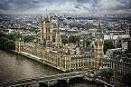
London is the capital city of England and the United Kingdom.a London has been a major settlement for two millennium, and the history of London goes back to its founding by the Romans, when it was named Londinium. London's core, the ancient City of London, the 'square mile', retains its medieval boundaries. Since at least the nineteenth century, the name "London" has also referred to the metropolis developed around it. Today, the bulk of this conurbation forms the London region and the Greater London administrative area, with its own elected mayor and assembly.

London is a major global city and one of the world's largest financial centers. Central London is home to the headquarters of more than half of the UK's top 100 listed companies (the FTSE 100) and more than 100 of Europe's 500 largest. London's influence in politics, finance, education, entertainment, media, fashion, the arts and culture in general contributes to its global position. It is a major tourist destination for both domestic and overseas visitors. London hosted the 1908 and 1948 Summer Olympics and will host the 2012 Summer Olympics. London contains four World Heritage Sites: the Tower of London; the historic settlement of Greenwich; the Royal Botanic Gardens, Kew; and the site comprising the Palace of Westminster, Westminster Abbey and St. Margaret's Church.

London has a diverse range of peoples, cultures, and religions, and more than 300 languages are spoken within its boundaries. In July 2007, it had an official population of 7,556,900 within the boundaries of Greater London making it the most populous municipality in the European Union. The Greater London Urban Area (the second largest in the EU) has a population of 8,278,251. while the metropolitan area (the largest in the EU) has an estimated total population of between 12 million and 14 million. The London Underground network, administered by Transport for London, is the most extensive underground railway network in the world, London Heathrow Airport is the world's busiest airport by number of international passengers and the airspace is the busiest of any urban centre in the world.

The City of London (boroughs)

London Cities
1. City of London
2. City of Westminster
3. Kensington and Chelsea
4. Hammersmith and Fulham
5. Wandsworth
6. Lambeth
7. Southwark
8. Tower Hamlets
9. Hackney
10. Islington
11. Camden
12. Brent
13. Ealing
14. Hounslow
15. Richmond
16. Kingston
17. Merton
18. Sutton
19. Croydon
20. Bromley
21. Lewisham
22. Greenwich
23. Bexley
24. Havering
25. Barking and Dagenham
26. Redbridge
27. Newham
28. Waltham Forest
29. Haringey
30. Enfield
31. Barnet
32. Harrow
33. Hillingdon

Queen Elizabeth II

Elizabeth II Queen of the United Kingdom, Canada, Australia, New Zealand, and the other Commonwealth realms.
Elizabeth became Queen of the United Kingdom, Canada, Australia, New Zealand, South Africa, Pakistan, and Ceylon upon the death of her father, George VI, on 6 February 1952. Her reign of 57 years has seen sweeping changes, including the continued evolution of the British Empire into the modern Commonwealth of Nations. As colonies gained independence from the United Kingdom, she became queen of 25 newly independent countries. She is one of the longest-reigning British monarchs, and has been the sovereign of 32 individual nations, but half of them later became republics.
Elizabeth married Prince Philip, Duke of Edinburgh in 1947. The couple have four children and eight grandchildren.

Elizabeth II (Elizabeth Alexandra Mary; born 21 April 1926) is the queen regnant of sixteen independent states known informally as the Commonwealth realms: the United Kingdom, Canada, Australia, New Zealand, Jamaica, Barbados, the Bahamas, Grenada, Papua New Guinea, the Solomon Islands, Tuvalu, Saint Lucia, Saint Vincent and the Grenadines, Belize, Antigua and Barbuda, and Saint Kitts and Nevis. She holds each crown separately and equally in a shared monarchy, and carries out duties for each state of which she is sovereign, as well as acting as Head of the Commonwealth, Supreme Governor of the Church of England, Duke of Normandy, Lord of Mann, and Paramount Chief of Fiji. In theory her powers are vast; however, in practice, and in accordance with convention, she rarely intervenes in political matters.

UK

Places to visit United Kingdom. Includes details on accommodation, events,
History the Kingdom of Great Britain was created (1 May 1707) by the political union of the Kingdom of England (which included Wales) and the Kingdom of Scotland. This event was the result of the Treaty of Union that was agreed on 22 July 1706, and then ratified by both the Parliament of England and Parliament of Scotland each passing an Act of Union in 1707. Almost a century later, the Kingdom of Ireland, already under English control by 1691, merged with the Kingdom of Great Britain to form the United Kingdom with the passing of the Act of Union 1800. Although England and Scotland had been separate states prior to 1707, they had been in personal union since the Union of the Crowns in 1603, when James VI King of Scots had inherited the throne of the Kingdoms of England and Ireland and moved his court from Edinburgh to London.

In its first century, the United Kingdom played an important role in developing Western ideas of the parliamentary system as well as making significant contributions to literature, the arts, and science. The UK-led Industrial Revolution transformed the country and fueled the growing British Empire. During this time, the UK, like other great powers was involved in colonial exploitation, including the Atlantic slave trade, although with the passing of the Slave Trade Act in 1807 the UK took a leading role in combating the trade in slaves.

After the defeat of Napoleon in the Napoleonic Wars, the UK emerged as the principal naval power of the 19th century and remained an eminent power into the mid-20th century. The British Empire expanded to its maximum size by 1921, gaining the League of Nations mandate over former German and Ottoman colonies after World War I. One year later, the BBC, the world's first large-scale international broadcasting network, was created.

An election victory for Sinn Féin in 1918, followed by a war of independence in Ireland led to the partition of the island in 1921 followed by independence for the Irish Free State in 1922 with Northern Ireland opting to be part of the UK. As a result, in 1927, the formal name of the UK was changed to its current name, the United Kingdom of Great Britain and Northern Ireland. The Great Depression broke out at a time when the UK was still far from having recovered from the effects of the World War I.
The United Kingdom was one of the Allies of World War II. Following the defeat of its European allies in the first year of the war, the United Kingdom continued the fight against Germany in the aerial campaign known as the Battle of Britain. After the victory, the UK was among the powers to help plan the postwar world. World War II left the United Kingdom financially damaged. However, Marshall Aid and costly loans taken from both the United States and Canada helped the UK on the road to recovery.

The immediate post-war years saw the establishment of the Welfare State, including among the world's first and most comprehensive public health services. Changes in government policy also brought people from all over the Commonwealth to create a multiethnic Britain. Although the new postwar limits of Britain's political role were confirmed by the Suez Crisis of 1956, the international spread of the English language meant the continuing influence of its literature and culture, while from the 1960s its popular culture also found influence abroad.

Following a period of global economic slowdown and industrial strife in the 1970s, the 1980s saw the inflow of substantial North Sea oil revenues and economic growth. The premiership of Margaret Thatcher marked a significant change of direction from the post-war political and economic consensus; a path that has continued under the New Labour governments of Tony Blair and Gordon Brown since 1997.

The United Kingdom was one of the 12 founding members of the European Union at its launch in 1992 with the signing of the Maastricht Treaty. Prior to that, it had been a member of the EU's forerunner, the European Economic Community (EEC), from 1973. The attitude of the present Labour government towards further integration with this organisation is mixed, with the Official Opposition, the Conservative Party, favouring fewer powers and competencies being transferred to the EU. The end of the 20th century saw major changes to the governance of the UK with the establishment of devolved national administrations for Northern Ireland, Scotland, and Wales following pre-legislative referenda.

United Kingdom, the UK, - Britain

Vacation and travel to ...
United Kingdom of Great Britain and Northern Ireland (the United Kingdom, the UK, or as Britain) is a sovereign state located off the northwestern coast of continental Europe. It is an island country, spanning an archipelago including Great Britain, the northeastern part of Ireland, and many small islands. Northern Ireland is the only part of the UK with a land border, sharing it with the Republic of Ireland. Apart from this land border, the UK is surrounded by the Atlantic Ocean, the North Sea, the English Channel and the Irish Sea. The largest island, Great Britain, is linked to France by the Channel Tunnel.

The United Kingdom is a constitutional monarchy and unitary state consisting of four countries: England, Northern Ireland, Scotland and Wales. It is governed by a parliamentary system with its seat of government in London, the capital, but with three devolved national administrations in Belfast, Cardiff and Edinburgh, the capitals of Northern Ireland, Wales and Scotland respectively. The Channel Island bailiwicks of Jersey and Guernsey, and the Isle of Man are Crown Dependencies and are often not considered part of the UK, though they are treated as part of it for many purposes including nationality. The UK has fourteen overseas territories, all remnants of the British Empire, which at its height in 1922 encompassed almost a quarter of the world's land surface, the largest empire in history. British influence can continue to be observed in the language, culture and legal systems of many of its former colonies.

The UK is a developed country, with the world's sixth largest economy by nominal GDP and the seventh largest by purchasing power parity. It was the world's first industrialised country and the world's foremost power during the 19th and early 20th centuries, but the economic cost of two world wars and the decline of its empire in the latter half of the 20th century diminished its leading role in global affairs. The UK nevertheless remains a major power with strong economic, cultural, military, scientific and political influence. It is a nuclear weapons state and has the third highest defence spending in the world. It is a Member State of the European Union, a permanent member of the United Nations Security Council, and is a member of the Commonwealth of Nations, G8, G20, OECD, NATO, and the World Trade Organization.

Study in UK

Study universities And College in London
Education - Most schools came under state control in the Victorian era, a formal state school system was instituted after the Second World War. Initially schools were separated into infant schools (normally up to age 4 or 5), primary schools and secondary schools (split into more academic grammar schools and more vocational secondary modern schools). Under the Labour governments of the 1960s and 1970s most secondary modern and grammar schools were combined to become comprehensive schools. England has many prominent private schools, often founded hundreds of years ago, which are known as public schools or independent schools. Eton, Harrow and Rugby are three of the better known. Most primary and secondary schools in both the private and state sectors have compulsory school uniforms. Allowances are almost invariably made, however, to accommodate religious dress including the Islamic hijab and Sikh bangle (kara).

Although the Minister of Education is responsible to Parliament for education, the day to day administration and funding of state schools is the responsibility of Local Education Authorities.

England's universities include the so-called Oxbridge universities of (Oxford University and Cambridge University) which are amongst the world's oldest universities and are generally ranked top of all British universities. Some institutions are world-renowned in specialised and often narrow areas of study, such as Imperial College London (science and engineering) and London School of Economics (economics and social sciences). Academic degrees are usually split into classes: first class (I), upper second class (II:1), lower second class (II:2) and third (III), and unclassified (below third class).

England has some of the top universities in the world; University of Cambridge, University of Oxford, Imperial College London and University College London are ranked in the global top 10 in the 2008 THE–QS World University Rankings. Trends in International Mathematics and Science Study (TIMSS) rated pupils in England 7th in the world for Maths, and 6th for Science. The results put England's pupils ahead of other European countries, including Germany and Scandinavian countries.

Architecture in UK

architecture And Building in UK And ondon
The architecture of the United Kingdom has a long and diverse history from beyond Stonehenge to the designs of
Norman Foster and the present day. In the United Kingdom, a listed building is a building or other structure officially designated as being of special architectural, historical or cultural significance. About half a million buildings in the UK have "listed" status.

The earliest remnants of architecture in what is now the United Kingdom are mainly neolithic monuments such as Stonehenge, the Giant's Ring, and Avebury, and Roman ruins such as the spa in Bath. Many castles remain from the medieval period and in most towns and villages the parish church is an indication of the age of the settlement, built as they were from stone rather than the traditional wattle and daub.

Over the two centuries following the Norman conquest of 1066, and the building of the Tower of London, many great castles such as Caernarfon Castle in Wales and Carrickfergus Castle in Ireland were built to suppress the natives. Large houses continued to be fortified until the Tudor period, when the first of the large gracious unfortified mansions such as the Elizabethan Montacute House and Hatfield House were built.

The Civil War 1642—49 proved to be the last time in British history that houses had to survive a siege. Corfe Castle was destroyed following an attack by Oliver Cromwell's army, but Compton Wynyates survived a similar ordeal. After this date houses were built purely for living, with design and appearance more important than defence.

Just prior to the Civil War, Inigo Jones, who is regarded as the first significant British architect, came to prominence. He was responsible for importing the Palladian manner of architecture to the UK from Italy; the Queen's House at Greenwich is perhaps his best surviving work.

Following the restoration of the monarchy in 1660 and the Great Fire of London in 1666 an opportunity was missed in London to create a new metropolitan city, featuring modern architectural styles. Although one of the best known British architects, Sir Christopher Wren, was employed to design and rebuild many of the ruined ancient churches of London, his master plan for rebuilding London as a whole was rejected. It was in this period that he designed St Paul's Cathedral, the building that he is perhaps best known for. The dome of St Paul's inspired the United States Capitol.[9]

In the early 18th century baroque architecture—popular in Europe—was introduced, and Blenheim Palace was built in this era. However, baroque was quickly replaced by a return of the Palladian form. The Georgian architecture of the 18th century was an evolved form of Palladianism. Many existing buildings such as Woburn Abbey and Kedleston Hall are in this style. Among the many architects of this form of architecture and its successors, neoclassical and romantic, were Robert Adam, Sir William Chambers, and James Wyatt.

In the early 19th century the romantic medieval gothic style appeared as a backlash to the symmetry of Palladianism, and such buildings as Fonthill Abbey were built. By the middle of the 19th century, as a result of new technology, construction was able to develop incorporating steel as a building component; one of the greatest exponents of this was Joseph Paxton, architect of the Crystal Palace. Paxton also continued to build such houses as Mentmore Towers, in the still popular retrospective Renaissance styles. In this era of prosperity and development British architecture embraced many new methods of construction, but ironically in style, such architects as August Pugin ensured it remained firmly in the past.

At the beginning of the 20th century a new form of design arts and crafts became popular, the architectural form of this style, which had evolved from the 19th century designs of such architects as George Devey, was championed by Edwin Lutyens. Arts and crafts in architecture is symbolized by an informal, non symmetrical form, often with mullioned or lattice windows, multiple gables and tall chimneys. This style continued to evolve until World War II.

Following the Second World War reconstruction went through a variety of phases, but was heavily influenced by Modernism, especially from the late 1950s to the early 1970s. Many bleak town centre redevelopments—criticised for featuring hostile, concrete-lined "windswept plazas"—were the fruit of this interest, as were many equally bleak public buildings, such as the Hayward Gallery. Many Modernist inspired town centres are today in the process of being redeveloped, Bracknell town centre being a case in point.

However, it should not be forgotten that in the immediate post-War years many thousands (perhaps hundreds of thousands) of council houses in vernacular style were built, giving working class people their first experience of private gardens and indoor sanitation.

Modernism remains a significant force in UK architecture, although its influence is felt predominantly in commercial buildings. The two most prominent proponents are Lord Rogers of Riverside and Lord Foster of Thames Bank. Rogers' iconic London buildings are probably Lloyd's Building and the Millennium Dome, while Foster created the Swiss Re Buildings (aka The Gherkin) and the Greater London Authority H.Q.

English Language

Learn English Language in London ?
The United Kingdom does not have a constitutionally defined official language. English is the main language and is t
hus the de facto official language.
However, individual countries within the UK have frameworks for the promotion of their indigenous languages. In Wales, all pupils at state schools must study Welsh until aged 16, and Welsh and English are both widely used by officialdom. Irish and Ulster Scots enjoy limited
use alongside English in Northern Ireland, mainly in publicly commissioned translations. The Gaelic Language (Scotland) Act, passed by the Scottish Parliament in 2005, recognised Gaelic as an official language of Scotland, commanding equal respect with English, and required the creation of a national plan for Gaelic to provide strategic direction for the development of the Gaelic language.

Under the European Charter for Regional or Minority Languages, which is not legally enforceable, the UK Government has committed itself to the promotion of certain linguistic traditions. The Welsh Language, Scottish Gaelic and Cornish are to be developed in Wales, Scotland and Cornwall respectively. Other native languages afforded such protection include: Irish in Northern Ireland; Scots in Scotland and Northern Ireland, where it is known in official parlance as "Ulster Scots" or "Ullans" but in the speech of users simply as "Scotch" or Broad Scots; and British Sign Language.

Culture of the UK

Visit to UK getting around to London, sightseeing, eating and drinking, booking accommodation, ...
The culture of the United Kingdom refers to the patterns of human activity and symbolism associated with the United Kingdom and its people since its formation in 1707. It is informed by the UK's history as a developed island country, major power, and, as a union of four countries, each of which have preserved elements of distinct customs and symbolism.

As a direct result of the British Empire, British cultural influence (such as the English language) can be observed in the language and culture of a geographically wide assortment of countries such as Canada, Australia, New Zealand, India, Pakistan, South Africa, the United States, and the British overseas territories. These states are sometimes collectively known as the Anglosphere. As well as the British influence on its empire, the empire also influenced British culture, particularly British cuisine. Innovations and movements within the wider-culture of Europe have also changed the United Kingdom; Humanism, Protestantism, and representative democracy are borrowed from broader Western culture.

The Industrial Revolution, with its origins in the UK, brought about major changes in agriculture, manufacturing, and transportation, and had a profound effect on the socio-economic and cultural conditions of the world. Popular culture of the United Kingdom in the form of the British invasion, Britpop and British television broadcasting, and British cinema, British literature and British poetry is revered across the world.

The social structure of Britain has played a central cultural role throughout the history of British society. As a result of the history of the formation of the United Kingdom, the cultures of England, Scotland, Wales and Northern Ireland are diverse and have varying degrees of overlap and distinctiveness.

England - Football

Go To England (UK) see The Football and buy a ticket
The modern global game of Football was first codified in 1863 in London. The impetus for this was to unify English public school and university football games.
Football was played in England as far back as medieval times. The first written evidence of a football match came in about 1170, when William Fitzstephen wrote of his visit to London, "After dinner all the youths of the city goes out into the fields for the very popular game of ball." He also went on to mention that each trade had their own team, "The elders, the fathers, and the men of wealth come on horseback to view the contests of their juniors, and in their fashion sport with the young men; and there seems to be aroused in these elders a stirring of natural heat by viewing so much activity and by participation in the joys of unrestrained youth." Kicking ball games are described in England from 1280.

In 1314, Edward II, then the King of England, said about a sport of football and the use of footballs, "certain tumults arising from great footballs in the fields of the public, from which many evils may arise." An account of an exclusively kicking "football" game from Nottinghamshire in the fifteenth century bears similarity to association football. By the 16th centuries references to organised teams and goals had appeared. There is evidence for refereed, team football games being played in English schools since at least 1581. The eighteenth century Gymnastic Society of London is, arguably, the world's first football club.

The Cambridge rules, first drawn up at Cambridge University in 1848, were particularly influential in the development of subsequent codes, including association football. The Cambridge Rules were written at Trinity College, Cambridge, at a meeting attended by representatives from Eton, Harrow, Rugby, Winchester and Shrewsbury schools. They were not universally adopted. During the 1850s, many clubs unconnected to schools or universities were formed throughout the English-speaking world, to play various forms of football. Some came up with their own distinct codes of rules, most notably, Sheffield Football Club (the world's oldest club), formed by former public school pupils in 1857, which led to formation of the Sheffield & Hallamshire Football Association in 1867. In 1862, John Charles Thring of Uppingham School also devised an influential set of rules. These ongoing efforts contributed to the formation of The Football Association (The FA) in 1863, which first met on 26 October 1863 at the Freemasons' Tavern in Great Queen Street, London. The Sheffield FA played by its own rules until the 1870s with the FA absorbing some of its rules until there was little difference between the games. A match between Sheffield and Hallam F.C. on 29 December 1862 was one of the first matches to be recorded in a newspaper.

" The sport is almost always referred to simply as "football". It is unusual for it to be called "soccer" and it is only referred to as "association football" in very limited circumstances. Any unqualified reference to football in an English context should be read as a reference to association football rather than to any other member of the football family of sports. The only other members of this family played to any great extent in England belong to the rugby football sub-family, and are usually referred to as rugby. The title and remainder of this article refers to football in its English sense."

Transport in the United Kingdom

Visit to UK by, Air transport, Railways or flight to London
Transport in the United Kingdom; The Highways Agency is the executive agency responsible for trunk roads and motorways in England apart from the privately owned and operated M6 Toll. The Department for Transport states that traffic congestion is one of the most serious transport problems and that it could cost England an extra £22 billion in wasted time by 2025 if left unchecked. According to the government-sponsored Eddington report of 2006, congestion is in danger of harming the economy, unless tackled by road pricing and expansion of the transport network.
The Scottish transport network is the responsibility of the Scottish Government's Enterprise, Transport and Lifelong Learning Department with Transport Scotland being the Executive Agency that is accountable to the Cabinet Secretary for Finance and Sustainable Growth for Scotland's trunk roads and rail networks. Scotland's rail network has around 340 railway stations and 3,000 kilometres of track with over 62 million passenger journeys made each year. In 2008, The Scottish Government set out investment plans for the next 20 years, with priorities to include a new Forth Road Bridge and electrification of the rail network.

Across the UK, there is a radial road network of 46,904 kilometres of main roads with a motorway network of 3,497 kilometres . There are a further 213,750 kilometres of paved roads. The rail network of 16,116 km in Great Britain and 303 route km in Northern Ireland carries over 18,000 passenger trains and 1,000 freight trains daily. Urban rail networks are well developed in London and other cities. There was once over 48,000 route kmof rail network in the UK, however most of this was reduced over a time period from 1955 to 1975, much of it after a report by a government advisor Richard Beeching in the mid 1960s (known as the Beeching Axe). Plans are now being considered to build new high speed lines by 2025.

London Heathrow Airport, located 15 miles west of the capital, is the UK's busiest airport and has the most international passenger traffic of any airport in the
world. It is the hub for the flag carrier British Airways, Virgin Atlantic, and BMI .

United Kingdom - Economy

The United Kingdom economy is made up (in descending order of size) of the economies of England, Scotland, Wales and Northern Ireland. Based on market exchange rates, the United Kingdom is today the sixth largest economy in the world and the third largest in Europe after Germany and France.

The Industrial Revolution started in the United Kingdom with an initial concentration on heavy industries such as shipbuilding, coal mining, steel production, and textiles. The empire created an overseas market for British products, allowing the UK to dominate international trade in the 19th century. However, as other nations industrialised, coupled with economic decline after two world wars, the United Kingdom began to lose its competitive advantage and heavy industry declined, by degrees, throughout the 20th century. Manufacturing remains a significant part of the economy, but accounted for only one-sixth of national output in 2003.[169]

The British motor industry is a significant part of this sector, although it has diminished with the collapse of the MG Rover Group and most of the industry is foreign owned. Civil and defence aircraft production is led by the second largest defence contractor in the world, BAE Systems,[170] and the continental European firm EADS, the owner of Airbus. Rolls-Royce holds a major share of the global aerospace engines market. The chemical and pharmaceutical industry is strong in the UK, with the world's second and sixth largest pharmaceutical firms (GlaxoSmithKline and AstraZeneca, respectively) being based in the UK.

The UK service sector, however, has grown substantially, and now makes up about 73% of GDP. The service sector is dominated by financial services, especially in banking and insurance. London is the world's largest financial centre with the London Stock Exchange, the London International Financial Futures and Options Exchange, and the Lloyd's of London insurance market all based in the City of London. London is a major centre for international business and commerce and is the leader of the three "command centres" for the global economy (along with New York City and Tokyo). It has the largest concentration of foreign bank branches in the world. In the past decade, a rival financial centre in London has grown in the Docklands area, with the HSBC, the world's largest bank, and Barclays Bank relocating their head offices there. Many multinational companies that are not primarily UK-based have chosen to site their European or rest-of-world headquarters in London: an example is the US financial services firm Citigroup. The Scottish capital, Edinburgh, has one of the large financial centres of Europe and is the headquarters of the Royal Bank of Scotland Group, one of the world's largest banks.
Tourism is very important to the British economy. With over 27 million tourists arriving in 2004, the United Kingdom is ranked as the sixth major tourist destination in the world.[177] London, by a considerable margin, is the most visited city in the world with 15.6 million visitors in 2006, ahead of 2nd placed Bangkok (10.4 million visitors) and 3rd placed Paris (9.7 million).[178]

The creative industries accounted for 7% GVA in 2005 and grew at an average of 6% per annum between 1997 and 2005.

The UK has a small coal reserve along with significant, yet continuously declining[180] natural gas and oil reserves. Over 400 million tonnes of proven coal reserves have been identified in the UK. In 2004, total UK coal consumption (including imports) was 61 million tonnes, allowing the UK to be self sufficient in coal for just over 6.5 years, although at present extraction rates it would take 20 years to mine. An alternative to coal-fired electricity generation is underground coal gasification (UCG). UGC involves injecting steam and oxygen down a borehole, which extracts gas from the coal and draws the mixture to the surface—a potentially very low carbon method of exploiting coal. Identified onshore areas that have the potential for UGC amount to between 7 billion tonnes and 16 billion tonnes. Based on current UK coal consumption, these volumes represent reserves that could last the UK between 200 and 400 years.
currency
The currency of the UK is the pound sterling, represented by the symbol £. The Bank of England is the central bank, responsible for issuing currency. Banks in Scotland and Northern Ireland retain the right to issue their own notes, subject to retaining enough Bank of England notes in reserve to cover the issue. The UK chose not to join the euro at the currency's launch, and the British Prime Minister, The Rt Hon Gordon Brown MP, has ruled out membership for the foreseeable future, saying that the decision not to join had been right for Britain and for Europe.[187] The government of former Prime Minister Tony Blair had pledged to hold a public referendum for deciding membership should "five economic tests" be met. In 2005, more than half (55%) of the UK were against adopting the currency, while 30% were in favour.

On 23 January 2009, Government figures from the Office for National Statistics showed that the UK was officially in recession for the first time since 1991. It entered a recession in the final quarter of 2008, accompanied by rising unemployment which increased from 5.2% in May 2008 to 7.6% in May 2009. The unemployment rate among 18 to 24-year-olds has risen from 11.9% to 17.3%.

The poverty line in the UK is commonly defined as being 60% of the median household income. In 2007-2008, 13.5 million people, or 22% of the population, lived below this line. This is a higher level of relative poverty than all but four other EU members. In the same year, 4.0 million children, 31% of the total, lived in households below the poverty line, after housing costs were taken into account. This is a decrease of 400,000 children since 1998-1999
.